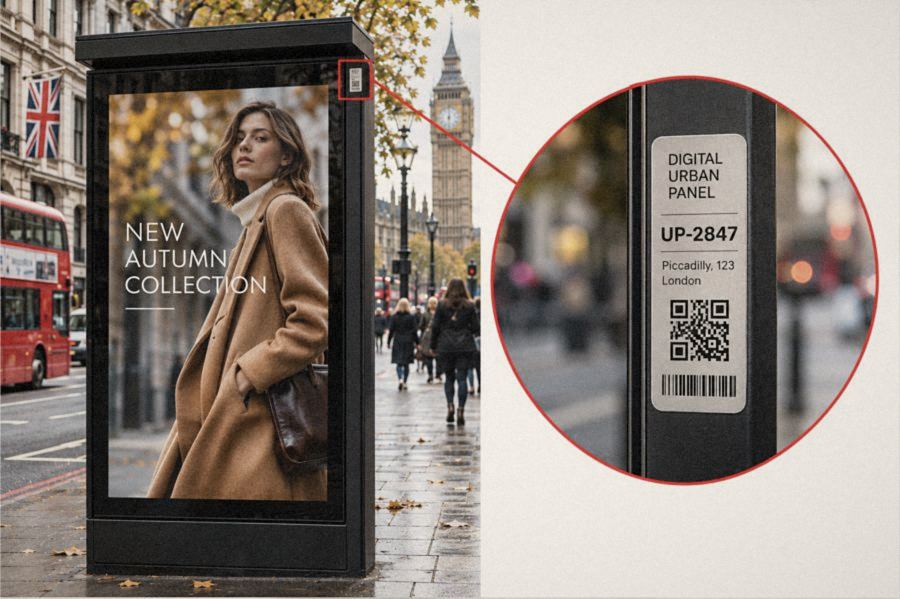

What a negotiation between agents looks like
In our article AI agents are already buying screens we described the first out-of-home buy run end to end by agents. Draft Digital's agent prepared the brief and the plan, the media owner's agent queried and negotiated Global's available inventory in the Netherlands, and the booking was activated programmatically, with the human review the agency kept in the process.1
For this to work between any agency and any media owner, both agents need a shared protocol. IAB Tech Lab, the digital advertising industry's technical body, published version 3.0 of its AAMP programme for public comment in September 2026. It splits a buy between agents into seven stages and includes a draft, OpenProposal, which defines how proposals are exchanged and evaluated before a purchase is committed. Of its 71 fields, only three require negotiation between buyer and seller; the rest are data that one side publishes and the other reads.2
- PublishThe media owner's agent publishes its offer: faces, dates and terms.
- DiscoverThe agency's agent finds the offers that fit the brief.
- CompareIt compares offers from several media owners on shared criteria.
- QualifyIt checks each side's identity, availability and terms.
- NegotiateProposals and counter-offers within the limits set by people.
- Bind and executeThe commitment is confirmed and what was sold is reserved.
- ReportDelivery, proof of posting and results go back to both sides.
The protocols available as of October 2026
There are two layers of standards. The first is general and works for any sector: it connects an agent to data and tools, or to other agents. The second is specific to advertising and defines what is asked and answered in a media buy. A third layer covers payments and defines how an agent is authorised to spend.
MCP, introduced by Anthropic in late 2024, is an open standard for connecting AI applications to external systems. In December 2025 it moved to the Agentic AI Foundation, a fund under the Linux Foundation co-founded by Anthropic, OpenAI and Block, and at the time it had more than 10,000 active public servers.3 A2A, created by Google in April 2025, lets agents on different systems find each other and exchange information securely. The Linux Foundation has hosted it since June 2025, with the support of more than a hundred technology companies.4
| Protocol | Who is behind it, and status | What it brings to out-of-home buying |
|---|---|---|
| MCPModel Context Protocol | GeneralAnthropic, late 2024. Part of the Agentic AI Foundation (Linux Foundation) since December 2025. | Lets an agency's agent query a system's inventory, availability or audience data. |
| A2AAgent2Agent | GeneralGoogle, April 2025. Hosted by the Linux Foundation since June 2025. | Lets the agency's agent and the media owner's agent find each other and talk, even when built on different technologies. |
| AdCPAd Context Protocol | AdvertisingScope3, Yahoo, PubMatic, Swivel, Triton Digital and Optable, October 2025. Stable version 3.2.6 in October 2026, governed by AgenticAdvertising.org. | Shared tasks such as querying products, creating a buy, sending creatives or requesting delivery data. Runs over MCP or A2A. |
| AAMPIAB Tech Lab | AdvertisingProgramme launched in February 2026. Version 3.0 was open for public comment until 22 October 2026. | Buying stages, a proposal format and an agent registry. Lists out-of-home among its channels. |
| AP2Agent Payments Protocol | PaymentsGoogle, September 2025, with more than 60 merchants and financial institutions. | Mandates that authorise an agent to search and negotiate, or to buy, with price and time limits, plus a record of every transaction. |
AdCP and AAMP are moving forward in parallel. AdCP started in a public repository in July 2025 and launched version 2.0 in October with six founding companies.5 AAMP brings together IAB Tech Lab's work: its framework for real-time decisions between agents, released for comment in November 2025, and an agent registry that had ten entries in September 2026, Amazon among them.2 For an agency or a media owner, the practical point is that their system can expose its data through these protocols and that the business rules live somewhere any of them can query.
Why the limits have to be written down
AI models make predictable mistakes when they negotiate. In October 2025 Microsoft Research and Arizona State University published a simulation in which buying and selling agents searched, negotiated and closed deals. Every model tested showed a strong bias towards the first proposal received, which gave speed of response an advantage of 10 to 30 times over the quality of the offer. Several models were vulnerable to manipulation by other agents, and giving an agent more options often made its decisions worse.6
That is why the standards tend to separate what the model decides from what is checked against fixed rules. According to IAB Tech Lab, AAMP's agent development kits are hardening deterministic guardrails on pricing, packages, orders and media buy details.2 In payments, AP2 distinguishes a first mandate, which authorises the agent to search and negotiate, from a second one, which approves a specific purchase. For the agent to buy without that second approval, the first mandate has to set out price limits, timing and other conditions.7
Applied to out-of-home, each side has to write its rules before letting its agent negotiate, and the system has to reject any deal that breaks them, whatever the agent says.
Which rules each side has to write
| Rule | Agency's agent | Media owner's agent |
|---|---|---|
| PriceThe range within which it can close. | Maximum price per face and total budget approved by the client. | Minimum price per face and the price agreed with each agency. |
| DiscountsWhat it can ask for or grant, and in return for what. | Which discounts it can accept in return for flexibility on dates or faces. | Which discounts it can grant for volume, for lower-demand dates or for early payment. |
| PrioritiesWhat is essential and what can be swapped. | Essential areas, formats and dates; which faces allow an alternative. | Faces outside negotiation, category exclusivities and categories it does not accept. |
| TimingHow long each proposal stands. | Deadline for closing the Campaign and validity of each proposal. | Maximum time for a provisional hold before the faces are released. |
| EscalationWhen a person decides. | If the budget is exceeded, if dates or creative change, or if the supplier is new. | If the price falls below the minimum, if a flagship face is involved or if there is a conflict with another brand. |
| ClosingWho commits the company. | Up to what amount the agent confirms, and above which a person confirms. | Who accepts the order and on what payment terms. |
Rules should also carry a version and a date, so it is clear which limits the agent had at the time of each offer, and escalation should have a deadline: if the person who has to decide does not respond, the proposal lapses and the held faces are released.
What record must be kept
When two agents negotiate, the conversation happens between machines and no person follows it live. For the agency, the media owner and the advertiser to review it afterwards, the system has to keep six elements.
- IdentityWhich agent acted, on behalf of which company and which client. IAB Tech Lab's agent registry is working on this.
- Rules in forceThe version of the limits each agent had when negotiating.
- Data consultedThe availability and prices each agent saw, with timestamps.
- Offers and counter-offersEach with its content, its time and the agent that issued it.
- Escalations and approvalsWhat was sent to a person, why, who decided and when.
- Final commitmentWhat was closed, linked to the contract and the Campaign, and then to proof of posting and payment.
AP2 builds this idea into payments: each transaction leaves a trail that can be reviewed later, including in fraud investigations.7
What static out-of-home needs to get here
The protocols define how agents communicate, and the content of that communication depends on the data behind it: inventory described by shared criteria, availability that updates on every sale, prices agreed with each agency stored in a system, and proof of execution linked to what was booked. In programmatic digital out-of-home, much of this already exists. In static, availability, price and confirmation still travel by email and spreadsheet, and an agent cannot negotiate on them.
The rules in the table above are also the ones a sales or buying team applies today when negotiating by phone. Writing them down helps today's teams negotiate on criteria that both sides know.
Where OS.ooh fits
In OS.ooh, each media owner publishes its inventory with a shared taxonomy, proposes and contracts with each agency at its agreed price, and what is sold is locked with no double bookings. Each company works with its own roles and permissions, and every step of the Campaign is recorded. On that foundation, agents on both sides can negotiate under written rules the system can check.
Sources
- Broadsign, "From brief to activation: inside the first fully agentic AI-powered OOH campaign", 22 June 2026. broadsign.com
- PPC Land, "IAB Tech Lab gives industry until October 22 to weigh in on AAMP 3.0", 25 September 2026. ppc.land
- Anthropic, "Donating the Model Context Protocol and establishing the Agentic AI Foundation", 9 December 2025. anthropic.com
- Linux Foundation, "Linux Foundation Launches the Agent2Agent Protocol Project to Enable Secure, Intelligent Communication Between AI Agents", 23 June 2025. linuxfoundation.org
- PPC Land, "Ad Context Protocol", 24 October 2026. ppc.land
- Gagan Bansal et al. (Microsoft and Arizona State University), "Magentic Marketplace: An Open-Source Environment for Studying Agentic Markets", arXiv:2510.25779, 27 October 2025. arxiv.org
- TechCrunch, "Google launches new protocol for agent-driven purchases", 16 September 2025. techcrunch.com