How digital out-of-home is verified
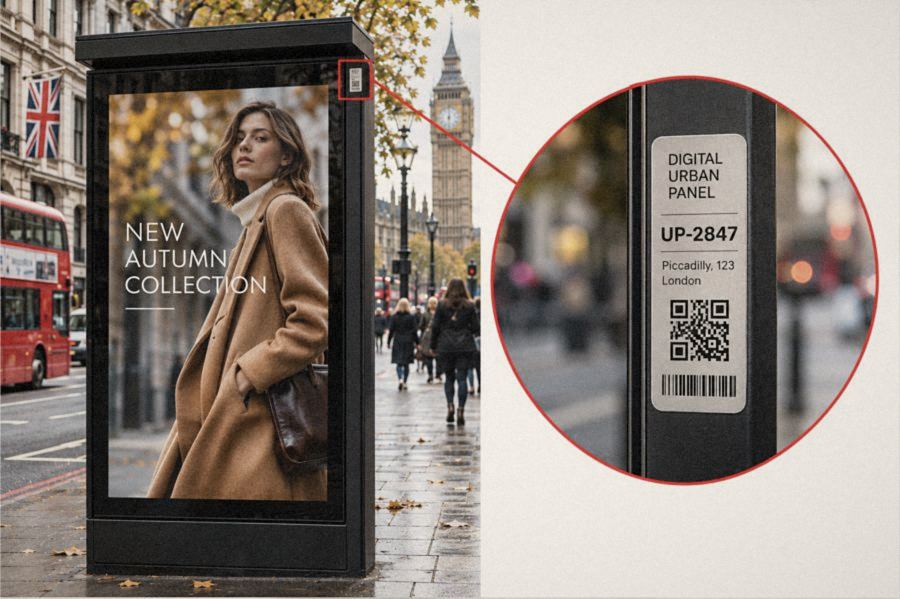
Every digital screen produces a log with the time of each play, and that log can be audited. In the UK, Outsmart, the out-of-home media owners' association, runs Playout, a shared system to which eight media owners send their play data, including JCDecaux, Global and Bauer Media Outdoor. The aim is for data to arrive within fifteen minutes, and the system is audited every quarter.1
In Switzerland, APG|SGA commissioned PwC to review its digital out-of-home processes. Among other things, PwC checked that the duration played matches the duration booked, that plays lost to faults are not billed and that clients are compensated when what they bought is not delivered.2
On top of that comes independent verification, which does not rely on the media owner's own data. In May 2026 Azerion opened it to every programmatic digital out-of-home buyer on its platform, working with Veridooh. The announcement cited its own research, in which 58% of UK planners and buyers saw measurement and attribution uncertainty as the biggest barrier to investing more in digital out-of-home.3
- Audited play logDigitalEvery play logged and reviewed by an external auditor.
- Independent verificationDigitalA third party checks delivery without relying on the media owner's data.
- Inventory and Campaign certificationDigital and staticIn Spain, OJD has certified out-of-home networks under its technical rules since 2022.
- Dated, geotagged photo linked to the faceStaticTraceable proof of each posting, tied to what was booked.
- Loose photo by emailStaticNo link to the booked face, date or creative.
How static out-of-home is verified
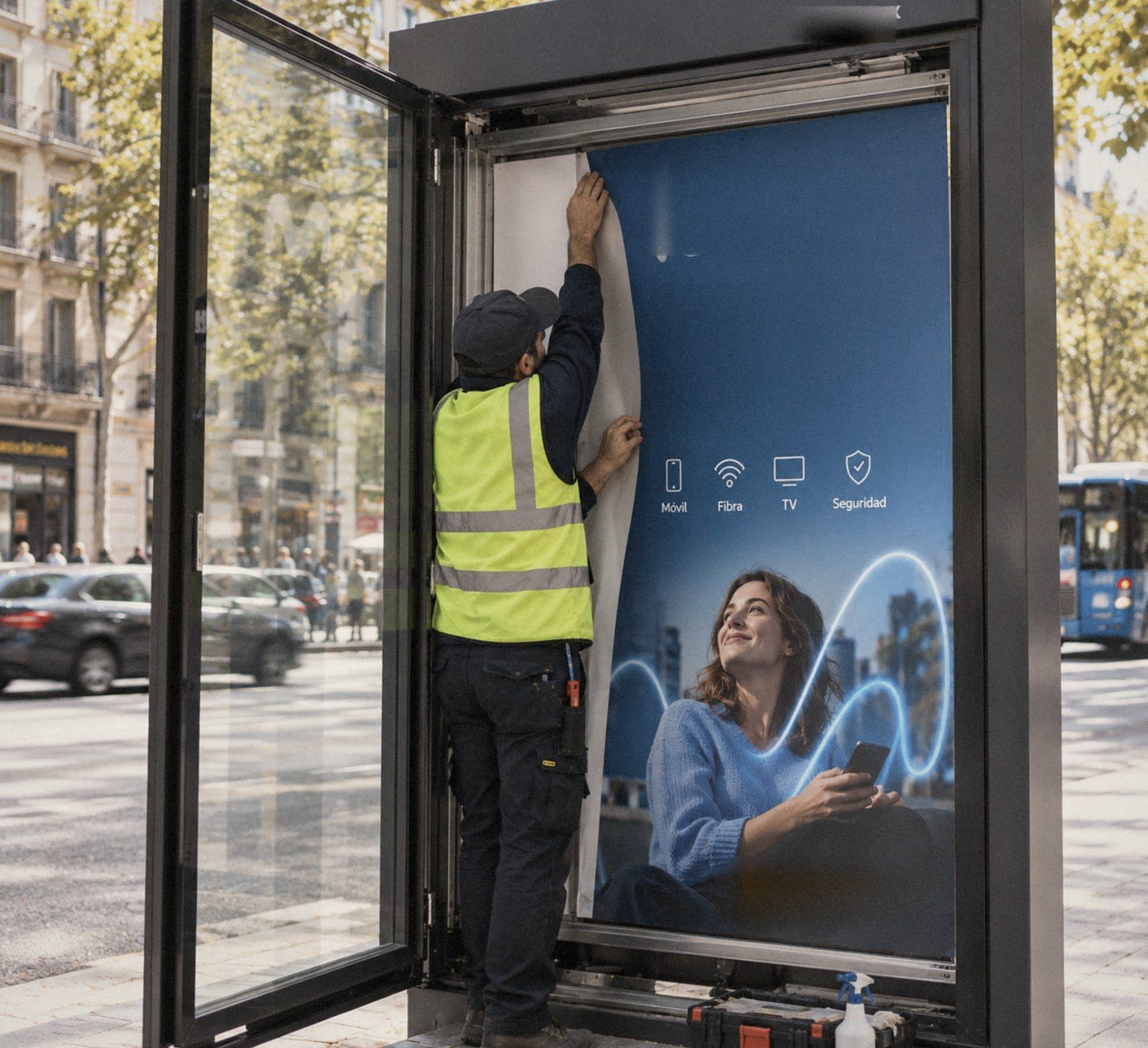
A paper billboard or urban panel keeps no automatic record. What proves the posting is the photo the installer takes, which usually reaches the agency by email or in a shared folder. Someone there checks, one by one, that each photo matches the booked face, that the creative is right and that the date falls within the Campaign period.
The UK has not solved this part either. In its July 2026 statement, Outsmart lists proof of posting for static among its pending work.1 In Spain, OJD published technical rules in 2022 for certifying out-of-home networks, digital and static. The certificate covers inventory and Campaign metrics and leaves out units with no visibility or out of service.4 It is a periodic certification of the network, so knowing whether a specific face was posted correctly in a specific Campaign still depends on the photo.
Field checks do find faults. In the first half of 2016, Kinetic had the billboards of fifteen Campaigns in Italy reviewed by a network of contributors who sent geotagged photos. Almost 10% of billboards did not carry the booked ad, and in some areas the share was higher.5
Every face posted wrongly means spotting the fault, proving it, agreeing the discount and issuing a credit note. When the only proof is a loose photo, that process starts again in every Campaign.
What data a proof of posting should carry
To close a Campaign without back-and-forth, the photo has to come with the data the agency and the advertiser will ask for, and that data has to be linked to what was booked.
- The photoTaken on the spot, with the whole face visible and legible.
- The booked faceSite and face reference, exactly as it appears in the Campaign.
- Date, time and locationRecorded by the device and comparable with the site's coordinates.
- The creativeMatched against the one approved for that face.
- The statusCorrect, damaged, covered or pending, and who validated it.
- The link to the invoiceWhatever cannot be proved is reflected in the invoice, with no argument later.
What each side gains
Media owners
- No need to gather photos at the end of every Campaign to prove the work.
- See an issue the same day and fix it before invoicing.
- Get paid for what was delivered without negotiating face by face.
Agencies and brands
- Check the status of every face without emailing the media owner.
- Send the client a Campaign report with the proof included.
- Pay for what was delivered, with issues already deducted.
How OS.ooh handles it
In OS.ooh, agencies, media owners and installers work in the same system. Every proof of posting is linked to the booked face and Campaign, issues are recorded and the invoice is generated from what was delivered.
Sources
- Outsmart, "Outsmart and Third Party Verification Statement", July 2026. outsmart.org.uk
- Markt & Kommunikation, "APG|SGA: Delivery of DOOH campaigns is now PwC-verified". markt-kom.com
- ExchangeWire, "Azerion-Veridooh partnership brings independent verification to programmatic DOOH", 20 May 2026. exchangewire.com
- OJD (Información y Control de Publicaciones), "Normas técnicas de control para redes de publicidad exterior", November 2022 (in Spanish). ojd.es
- BeMyEye, "BeMyEye and Kinetic join forces to tackle OOH billboard compliance issues", case on Campaigns from the first half of 2016. bemyeye.com