
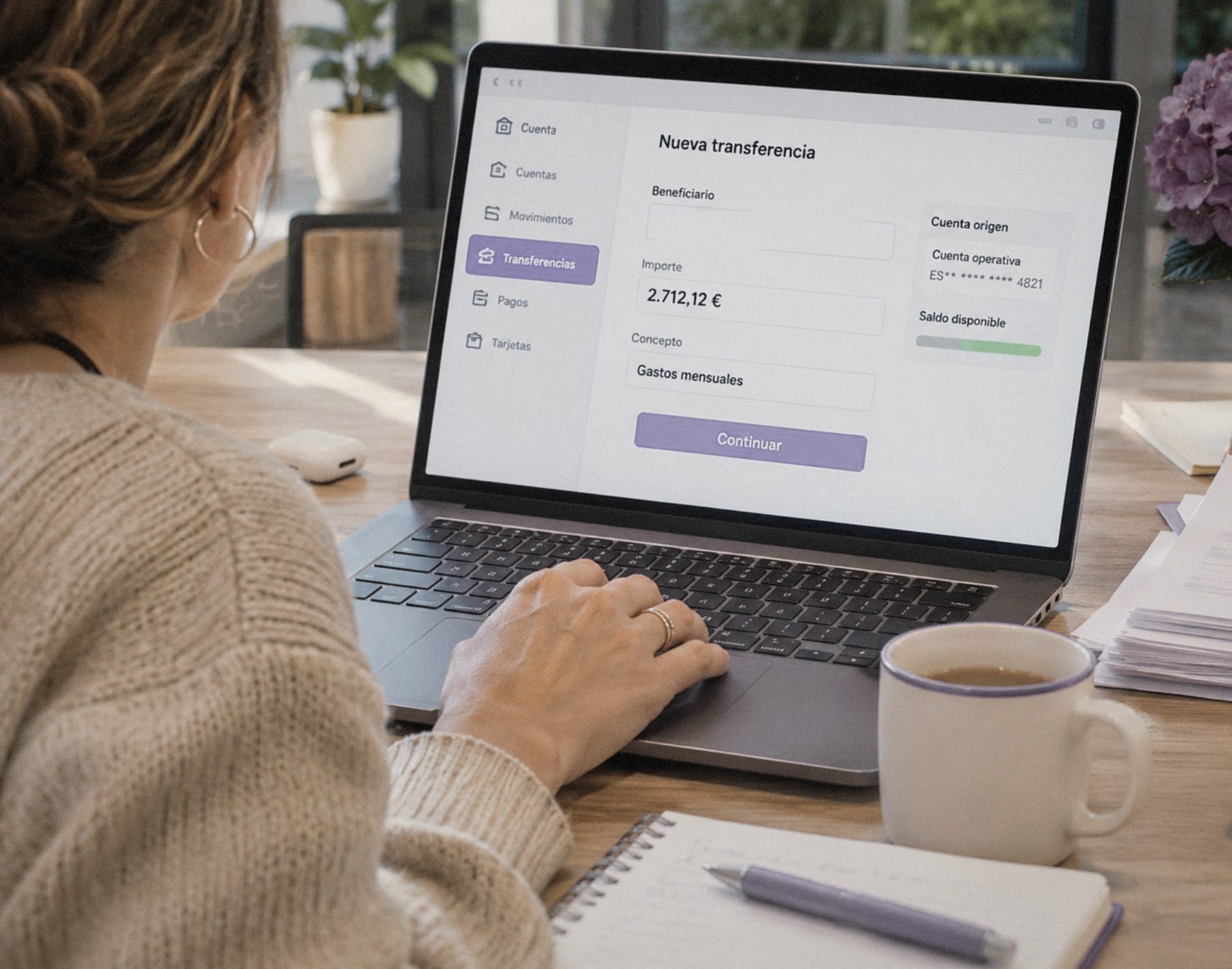
What an administrator does today in an out-of-home operation
At a media owner, administrative work revolves around each Campaign and its documents. Someone has to check that what is invoiced to the agency matches what was booked and what the proof of posting shows. They have to issue the invoices, calculate what each site owner is due under their contract, match each payment on the bank statement to its invoice and, at the end of the cycle, prepare the payment run to suppliers and installers for the authorised signatory to approve in the bank.
Almost all of that work consists of matching data that already exists in other documents. Here we set out a model that can be deployed.
What it costs to process an invoice
Ardent Partners publishes an annual study of the accounts payable process. In its 2025 edition, The State of ePayables 2025, the average cost of processing an invoice was $9.84, and the most advanced teams brought it down by 79%.1 In another report the same year, AP Metrics That Matter in 2025, the firm put the average time a company takes to process an invoice at 9.2 days.2
Average cost of processing an invoice.
Lower cost for the most advanced (Best-in-Class) teams.
Average time to process an invoice.
These figures cover invoices received. Issuing invoices, settling with site owners and reconciling payments follow the same logic of matching documents.
A model in which the agent prepares and the person signs
The agent works with the same documents as an administrator. It matches contract, proof of posting and invoice, generates invoices and settlements, reconciles payments against the statement, prepares the payment run and sends it to the bank. The authorised signatory receives the payment run awaiting approval, together with a summary.
Today
- MatchingThe administrator compares contract, proof of posting and invoice by hand.
- Invoices and settlementsPrepared in the accounting system or in spreadsheets.
- ReconciliationEach payment on the statement is matched to its invoice.
- Payment fileThe payment file is built and uploaded to online banking.
- SignatureThe authorised signatory approves in the bank.
With an agent
- MatchingThe agent compares contract, proof of posting and invoice and flags the differences.
- Invoices and settlementsGenerated from what was delivered and from each site owner contract.
- ReconciliationPayments are matched to invoices and anything that does not match is set aside.
- Payment fileThe agent generates the pain.001 file and sends it to the bank, where it awaits signature.
- Review and signatureThe person reviews the summary and exceptions and signs in the bank.
The summary flags the exceptions: an invoice that does not match the proof of posting, an unusual amount, a new supplier or a bank account that has changed. With that information, the person decides whether to sign, correct or send the payment run back.
How a payment run reaches the bank
In the SEPA area, companies send their credit transfer orders to the bank in an XML file using the ISO 20022 standard. The message is called pain.001 (Customer Credit Transfer Initiation), and the European Payments Council guidelines in force since 5 October 2025 use version pain.001.001.09.3 In Spain, the banking associations AEB, CECA and UNACC publish the implementation guide for their members.4
The file has three levels: a header with the shared data, one or more payment blocks with the debit account and execution date and, inside each block, the individual transfers. Each transfer can carry up to 140 characters of information for the beneficiary, enough for the invoice number or the Campaign code. The bank returns rejections in a status report, the pain.002 message.3 How and where the file is delivered is agreed between the company and its bank.4 An agent can generate the file from approved invoices and send it through that channel, and the payment run waits in the bank for signature.
The signature stays with a person
Business banking lets a company define who signs and how many signatures are needed. ABANCA explains it this way in its help pages for businesses: when someone in the company places an order, it is not executed until an authorised signatory signs it, and if several signatures are required, it stays pending until they are all in place.5 This is known as joint signature or dual approval.
That set-up fits segregation of duties, a basic principle of internal control. COSO's internal control framework builds it into the design of control activities and calls for alternative controls where separating duties is not practical.6 Applied to the model, the agent prepares and sends without signing authority, and the person who signs stays out of the preparation.
There is a practical reason to keep it that way. In the 2025 survey by the AFP, the US Association for Financial Professionals, 79% of organisations experienced attempted or actual payments fraud in 2024, and 63% named business email compromise as the main avenue.7 An email asking to change a supplier's bank account is the typical case. In this model, the agent spots the change and holds the payment, and accepting it is always a decision for a person, who verifies it through a separate channel.
What mandatory e-invoicing changes
Spain's Law 18/2022 on business creation and growth, known as the "Crea y Crece" law, established the obligation to issue and receive electronic invoices between businesses and professionals.8 Royal Decree 238/2026 developed it, and Order HAC/1028/2026, published in the Official State Gazette on 5 October 2026, set the technical specifications. The obligation reaches companies turning over more than €8 million on 6 October 2027 and everyone else on 6 October 2028.9
Invoices will be exchanged using the European semantic model EN 16931, in UBL, CII, EDIFACT or Facturae syntax, and the Spanish Tax Agency will keep a copy of every one. Invoice recipients will have to report acceptance or rejection, the due date and the actual payment with its date, within four days, excluding weekends and national holidays.9
VeriFactu is a separate obligation that applies to the invoicing software of businesses outside the Immediate Supply of Information system (SII), generally those turning over less than €6 million. It was due in 2027, and in October 2026 the Ministry of Finance announced its postponement to October 2028 to align it with the extension of e-invoicing to all businesses. The change is pending formal approval.910
- Law 18/2022Spain's "Crea y Crece" law mandates e-invoicing between businesses.
- RD 238/2026Regulation: formats, platforms and payment status.
- Order HAC/1028/2026Sets the technical specifications.
- Over €8mMandatory for companies turning over more than €8 million.
- All other businessesMandatory for everyone. VeriFactu announced for the same date.
With structured invoices and payment status on record, matching contract, proof of posting and invoice becomes a comparison of data.
What the person always decides
The agent prepares
- Matches contract, proof of posting and invoice and flags the differences.
- Generates invoices and settlements with site owners.
- Reconciles incoming payments and suggests what to chase.
- Generates the payment file and sends it to the bank awaiting signature.
The person decides
- Signs every payment run in the bank.
- Approves credits, discounts and exceptions.
- Authorises any change to a supplier's bank details.
- Decides when to chase an unpaid invoice or renegotiate terms.
Where OS.ooh fits
OS.ooh links in one system what a back-office agent needs to match. Each contract is closed with each agency at its agreed price, proof of posting arrives with photo, GPS and time linked to the Campaign, and invoicing is drawn from what was delivered, in Facturae. Funds are held in an escrow account with MoneyToPay, an entity regulated by the Bank of Spain, and released when the agreed terms are met. Each company sets its own roles and permissions. On that base, an agent can be deployed to reconcile payments, prepare settlements and payment runs, and leave the final signature to the authorised person.
Sources
- Ardent Partners, "State of ePayables (Part Nine): AP Benchmarks and Best-in-Class Performance", on The State of ePayables 2025: AP's Unfinished Journey, 22 January 2026. payablesplace.ardentpartners.com
- Thomson Reuters, "Research Report: Ardent Partners 2025 AP Metrics", 15 April 2025. thomsonreuters.com
- European Payments Council, "SEPA Credit Transfer Customer-to-PSP Implementation Guidelines", EPC132-08, 2025 version 1.0, in force since 5 October 2025. europeanpaymentscouncil.eu
- AEB, CECA and UNACC, "Órdenes en formato ISO 20022 para emisión de transferencias y cheques en euros", implementation guide, version 1.0 RB 2025, October 2025 (in Spanish). aebanca.es
- ABANCA, "Operaciones en la banca electrónica", business help pages (in Spanish). abanca.com
- Deloitte, "COSO – Control Activities", 15 April 2020. deloitte.com
- AFP (Association for Financial Professionals), "Survey: 79% of Organizations Were Victims of Attempted or Actual Payments Fraud Activity in 2024", 15 April 2025. financialprofessionals.org
- Official State Gazette (BOE), Law 18/2022 of 28 September on business creation and growth (in Spanish). boe.es
- EY, "El 6 de octubre de 2027 entra en vigor la facturación electrónica", briefing, October 2026 (in Spanish). ey.com
- El Derecho, "Hacienda pospone a octubre de 2028 la implantación de Verifactu para empresas y autónomos", 5 October 2026 (in Spanish). elderecho.com